


Key Takeaways:
- An EOR helps companies hire international employees quickly without first opening a local entity.
- Compared to establishing a foreign business presence, an EOR can reduce the time, costs, and operational complexity of global hiring.
- Companies often use EORs to hire more flexibly while reducing compliance and worker classification risk.
An Employer of Record (EOR) can help companies hire internationally faster, reduce compliance risk, and avoid the cost and complexity of opening foreign entities.
Securing budget approval for a new vendor or international hiring solution can be challenging, especially when leadership is focused on growth, efficiency, and risk reduction.
When pitching an EOR to your CEO, the strongest business cases usually focus on speed, flexibility, operational efficiency, and long-term cost savings.
What Is an Employer of Record (EOR)?
An Employer of Record (EOR) is a third-party organization that legally employs workers on behalf of another company. The EOR handles employment contracts, global payroll, taxes, compliance, employee benefits, and other local employment requirements, while the client company manages the employee’s day-to-day work.
For companies expanding internationally, this allows them to hire employees in other countries without first establishing a local legal entity.
Worth noting: An EOR does not replace your company’s culture, management structure, or employee experience. Instead, it handles the legal, payroll, and compliance infrastructure behind the scenes.
Understand What Leadership Actually Cares About
One of the most common mistakes people make when presenting to leadership is focusing too heavily on software features or operational workflows.
Most CEOs are evaluating the decision through a much simpler lens: business impact.
When presenting an EOR option to leadership, avoid relying on HR jargon or overexplaining operational details.
Instead, focus on the business outcomes your CEO is most likely to care about: hiring speed, compliance, flexibility, operational efficiency, and long-term scalability.
Financial Impact and ROI
For many executives, the first question comes down to numbers. They want to understand whether an EOR is more cost-effective than other approaches and how quickly the company will see value from the investment.
Be prepared to discuss concrete figures tied to your hiring plans, not just general benefits. Compare the expected costs, timelines, and operational burden of using an EOR versus establishing an entity.
For many companies, the ROI of an EOR comes from faster hiring, reduced compliance risk, lower operational overhead, and avoiding the upfront cost of establishing foreign entities.
Risk Reduction
Global expansion creates compliance risk, especially when companies rely heavily on contractors in countries with strict labor laws.
Compliance failures can lead to fines, back taxes, worker classification disputes, and reputational damage. One of the strongest arguments for an EOR is that it helps companies navigate local employment laws.
Speed and Flexibility
For fast-growing companies, speed matters. Leadership teams often want to test new markets and hire quickly, snapping up the best and the brightest before their competitors do.
An EOR enables companies to hire internationally without waiting months to build local infrastructure, while also providing more flexibility to scale teams as hiring needs evolve.
That flexibility can be especially valuable for companies testing new markets or making their first international hires.
EOR vs. Establishing a Legal Entity
The most effective way to present the benefits of an EOR to your CEO is to compare it with the main alternative for global expansion: opening a local entity.
Setting up a foreign business presence often involves:
- Legal registration
- Tax setup
- Establishing payroll infrastructure
- Opening a local bank account
In addition, businesses typically need ongoing accounting, compliance, and legal support.
In many countries, the setup process can take months. For fast-moving companies, that delay can slow expansion plans and make it harder to secure top global talent.
An EOR removes much of that friction by allowing companies to hire employees in days instead of months, since there’s no need to build local infrastructure first.
EORs also give businesses more flexibility to test new markets and scale teams without committing significant time and money upfront.
Address Common Objections Upfront
CEOs will often have questions about costs, compliance, and operational impact, so it helps to prepare clear answers in advance.
Here are four common questions leadership may ask when evaluating whether or not to work with an EOR.
“Isn’t This Expensive?”
At first glance, an EOR fee may seem expensive compared to hiring employees directly, with some companies charging up to USD 699 per person per month.
But the real comparison goes well beyond a monthly platform cost.
Without an EOR, companies will need to account for expenses involving:
- Entity setup
- International payroll administration
- Legal and accounting support
- Tax registration and reporting
- Ongoing compliance oversight
- Internal administrative workload across HR, finance, payroll, and legal teams
There’s also the cost of reduced flexibility. Once a company invests heavily in setting up a local operation, changing direction becomes much harder. If the market underperforms, shutting everything down can take just as much time, money, and administrative work as setting it up in the first place.
And not all EORs charge USD 699 per person. For example, RemoFirst pricing starts at only USD 199 per person/month.
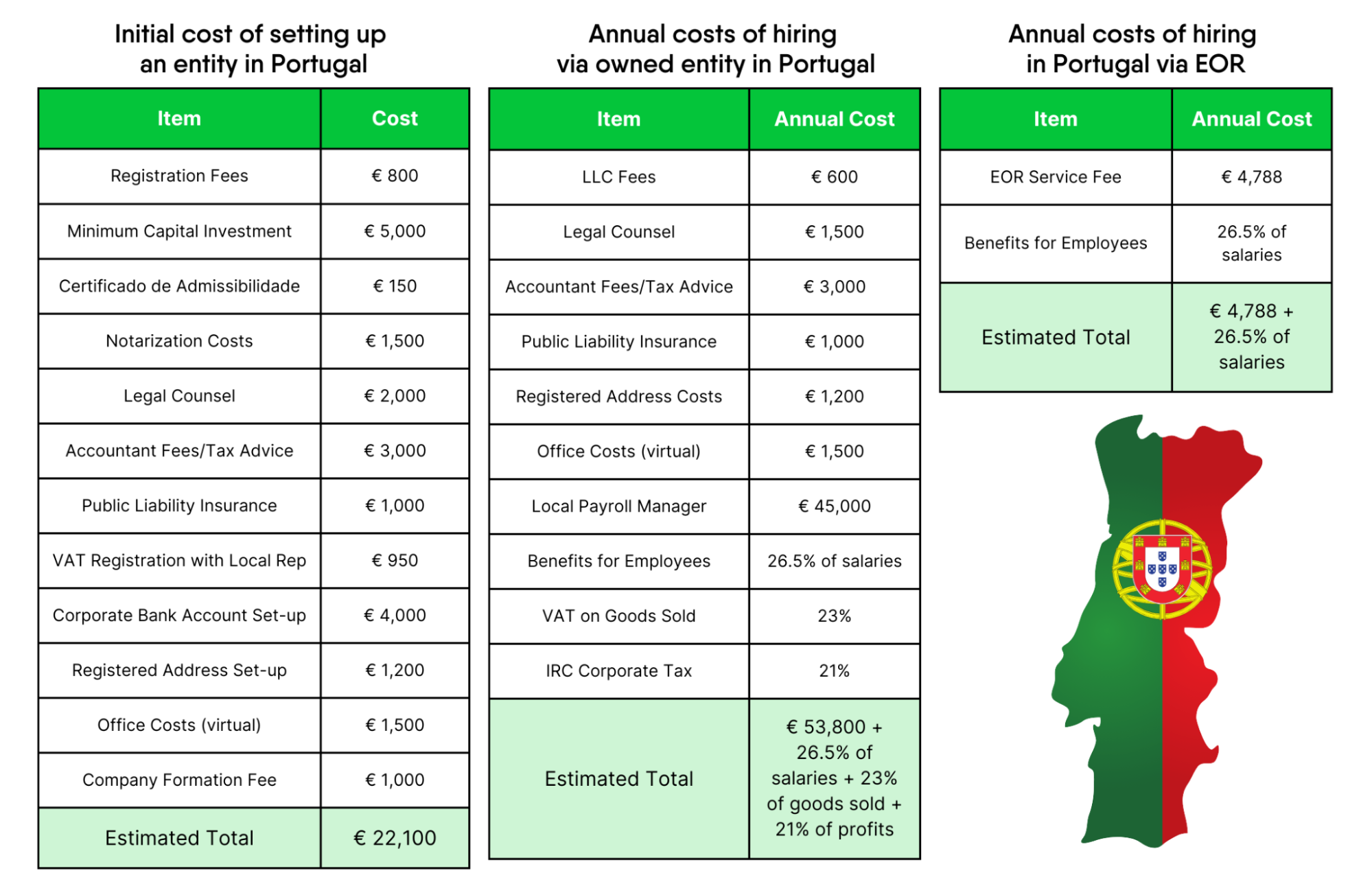
A side-by-side comparison can make these tradeoffs much easier for leadership to evaluate. Showing the full operational expenses associated with international hiring often reveals that an EOR is the lower-risk, more cost-effective option, especially during early expansion.
Here's an example of how you can present the cost difference to the leadership team.
“Why Not Use Contractors Instead?”
Hiring international contractors can initially seem simpler and less expensive than hiring employees through an EOR.
However, contractor misclassification is one of the most common compliance risks companies face during international expansion, and enforcement is intensifying around the world.
Penalties can include back taxes, retroactive benefit payments, and significant fines, all of which could hit multiple parts of your balance sheet simultaneously.
For companies planning long-term international growth, relying heavily on contractors can create increasing compliance exposure over time. An EOR helps reduce that risk by ensuring workers are properly classified from the start.
“Can’t We Do This In-House?”
You can, if your team already has experience navigating the labor laws and employment requirements in the countries where you plan to hire.
In reality, though, most internal teams aren’t equipped to manage employment compliance across multiple countries simultaneously.
Payroll and tax requirements, employment contracts, mandatory benefits, and termination laws can vary dramatically from one market to another, and regulations change frequently.
What seems manageable at first can quickly become a major headache for HR, legal, finance, and payroll teams.
An EOR helps companies avoid that complexity by providing local expertise and infrastructure from the start.
“How Long Will This Take?”
Part of getting leadership comfortable with using an EOR is explaining how straightforward the implementation process usually is.
In most cases, the process looks something like this:
- Step 1: Determine where you want to hire internationally and what level of support your business needs.
- Step 2: Choose an EOR that supports hiring in those countries and aligns with your hiring, payroll, and compliance requirements.
- Step 3: Work with the EOR to gather any required documentation and set up contracts, payroll, and onboarding workflows.
- Step 4: Start onboarding international employees, typically within days instead of months.
Use Real-World Hiring Examples to Demonstrate ROI
Executives typically respond better to practical examples than theoretical benefits. Instead of discussing global hiring in abstract terms, walk leadership through situations your company could realistically face.
For example, imagine the business wants to hire a sales leader in Germany to test a new market opportunity. Does it make sense to spend months and significant capital establishing a legal entity to hire one person, especially before knowing whether the German expansion will succeed?
An EOR allows the company to hire quickly, test the market, and scale if the opportunity grows, without committing to permanent infrastructure upfront. And if hiring needs or market conditions change, the business can adapt far more easily than it could after investing heavily in entity setup and local operations.
How to Structure Your Presentation to the CEO
The best executive presentations are usually the simplest ones.
When preparing your recommendation, focus on six core points:
1. The Problem
What international hiring challenges is the company facing now, or likely to face soon?
2. The Solution
Explain what an EOR does in straightforward business terms.
3. The Business Impact
Show how an EOR supports:
- Faster hiring
- Lower compliance risk
- Operational efficiency
- International expansion flexibility
4. The Financial Case
Compare the costs, timelines, and operational burden of entity setup versus using an EOR.
5. Real-World Scenarios
Use examples tied to your company’s actual hiring plans and expansion goals.
6. Your Recommendation
Present the EOR provider you recommend and explain why.
Executives respond to clear outcomes, practical examples, and straightforward financial reasoning. Keep the presentation focused and avoid unnecessary operational detail.
See Why RemoFirst Is the Right Strategic EOR Choice
When companies evaluate EOR providers, they typically compare country coverage, pricing transparency, onboarding speed, compliance support, and operational responsiveness.
Across the board, RemoFirst leads in these areas. We support hiring in 185+ countries and handle:
- Global payroll processing and international taxes
- Benefits administration, including global healthcare plans
- Ongoing compliance management as regulations change
- Local contracts, background checks, and contractor management
RemoFirst is also one of the more affordable EOR options on the market, with pricing often 30–50% lower than competitors'.
Our transparent flat-rate pricing starts at USD 199 per person/month for employees and USD 25 per person/month for contractors.
We offer fast onboarding, no onboarding fees, and 24/7 human support across time zones.
Getting budget approval for an EOR isn’t really about HR processes. It’s about showing how the right partner can help the company scale faster, reduce risk, and operate more efficiently.
Ready to move global hiring forward? Schedule a demo with RemoFirst to see why we’re a faster, more cost-effective, and lower-risk way to build an international team.
FAQs About Getting Leadership Approval for an EOR
What does an Employer of Record (EOR) do?
An EOR legally employs workers on behalf of another company. The EOR handles payroll, taxes, contracts, compliance, and local employment requirements, while the client company manages the employee’s day-to-day work.
Is an EOR cheaper than opening a foreign entity?
For many companies, especially during early expansion, an EOR is significantly more cost-effective than opening a foreign entity. Entity setup often includes legal registration, payroll infrastructure, tax setup, accounting support, and ongoing compliance management.
How quickly can an EOR onboard employees?
In many countries, employees can be onboarded through an EOR within days or a few weeks, depending on local requirements and required documentation.
Can an EOR help reduce contractor misclassification risk?
Yes. An EOR helps ensure workers are classified correctly under local labor laws, reducing the risk of fines, back taxes, and worker classification disputes.
When should a company open a local entity rather than use an EOR?
Opening an entity may make more sense once a company has established long-term operations in a specific country and plans to permanently hire a larger local workforce there.
Can an EOR support hiring in multiple countries?
Yes. Many EOR providers support hiring across dozens or even 100+ countries, making it easier for companies to manage global hiring through a single partner.
How can HR convince leadership to approve an EOR?
The strongest EOR business cases usually focus on hiring speed, reduced compliance risk, operational efficiency, and cost savings from avoiding early entity setup. Leadership teams typically respond best to clear financial comparisons and practical hiring scenarios tied to actual expansion goals.