Germany, one of Europe’s powerhouses, boasts a robust economy thanks to its strong focus on innovation and a highly skilled labor force. While the country offers immense potential for employers, it also has strict labor laws. Not only that, Germany has some of the world’s strongest data protection laws.
One way to simplify hiring in Germany is by partnering with an Employer of Record (EOR), which handles payroll, employee benefits, tax filings, and local labor law compliance on your behalf while you manage your employees’ day-to-day work.
Here’s a closer look at some of the top EORs for hiring in Germany.
Quick Look at the Top 5 EORs for Germany
1. RemoFirst
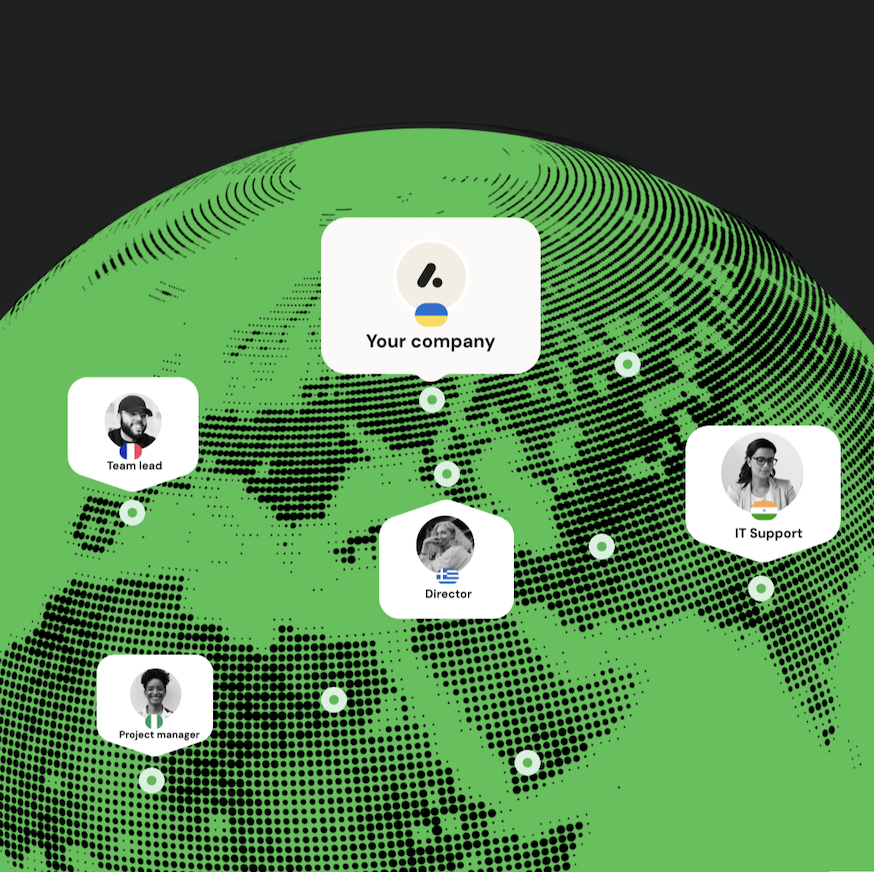
This global EOR provider helps companies hire employees in Germany and 185+ other countries, making it a strong option for businesses planning broader international expansion.
RemoFirst stands out for balancing comprehensive global coverage with affordability, offering transparent pricing with no hidden fees, minimums, or long-term contract requirements.
RemoFirst acts as the legal employer for German employees on your behalf, handling onboarding, global payroll, taxes, benefits administration, and local labor law compliance. The platform also supports contractor management, allowing companies to manage both employees and contractors in one place.
RemoFirst works with a local German partner that understands the nuances of German labor laws and employment regulations, helping companies stay compliant while providing a localized employee experience. Employers can also offer private health insurance through RemoHealth and RemoHealth Local.
Beyond compliance support, the platform makes it easy to manage payroll, expenses, and documentation through a centralized dashboard. Employers can consolidate invoices and salary payments into a single system, fund accounts in multiple currencies, and pay employees in euros (EUR).
RemoFirst also supports background checks and equipment provisioning, as well as visa and work permit assistance for employees relocating to Germany (or other countries).
The platform also receives strong user feedback, with a 4.5/5 rating on G2 across 400+ reviews.
In the past, hiring in Germany wasn’t an option for PandaDoc due to the difficulty their previous Employer of Record experienced navigating the country’s complex employment laws. But, with RemoFirst, it’s been a smooth process. The company is now able to hire more German employees and expand their global reach. Read our customer story here.
Key Features
- Coverage across 185+ countries
- Global payroll and tax processing
- Localized employment contracts aligned with German labor laws
- Administration of statutory and supplemental employee benefits
- RemoHealth and RemoHealth Local health insurance options
- Employee and contractor management in one platform
- Built-in background checks
- Visa and work permit support in 110+ countries
- Equipment provisioning and global shipping coordination
- Centralized dashboard for onboarding, payroll, and HR documentation
- Transparent pricing starting at USD 199 per employee/month and USD 25 per contractor/month
- No hidden fees, annual contracts, or minimum commitments
Pros
- More affordable pricing than many competing EOR platforms
- Fast onboarding, often completed within 1–3 days
- Dedicated account managers and responsive customer support
- Easy-to-use platform for managing payroll, onboarding, expenses, and compliance workflows
- Supports long-term international expansion without needing to switch providers
- Growing integrations ecosystem, including BambooHR and ADP Workforce Now
Cons
- Fewer HRIS integrations than some larger competitors
- Fewer advanced analytics and reporting features than some enterprise-focused platforms
2. Deel
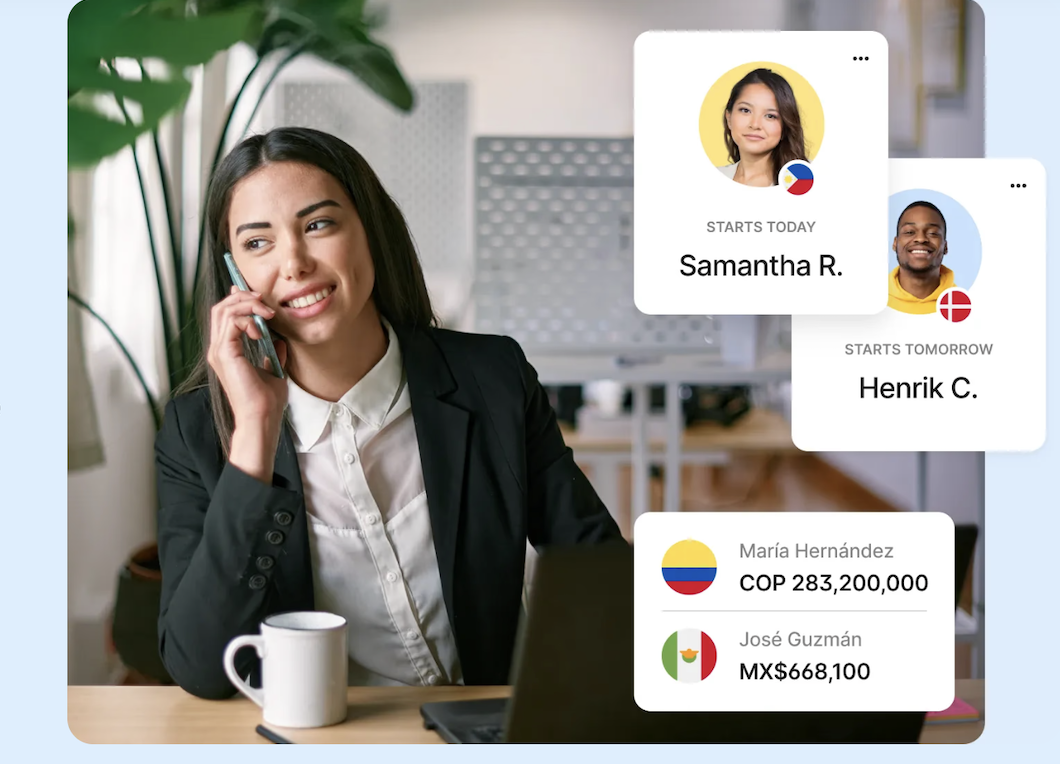
Deel supports hiring in Germany and 150+ other countries, offering services that include global payroll, localized employment contracts, compliance support, benefits administration, and contractor management.
Deel owns many of its legal entities, including in Germany, giving the company more direct control over parts of the employment process in those markets.
For companies hiring in Germany, Deel helps manage employment compliance requirements, payroll administration, statutory benefits, and onboarding. The platform also includes a large integration ecosystem and a broad set of workforce management tools, appealing to businesses seeking a highly centralized global HR solution.
That said, Deel’s broader feature set and enterprise-oriented platform can come with a steeper learning curve and higher pricing, which may not be ideal for smaller businesses or teams looking for a simpler, more cost-effective solution.
For a more detailed comparison, check out RemoFirst vs. Deel or explore Deel’s G2 reviews.
Key Features
- Owned entities in multiple jurisdictions
- Global payroll and compliance support
- Localized employment contracts
- Benefits administration
- Contractor and employee management
- Large integrations ecosystem
- Centralized workforce management platform
Pros
- Broad international hiring coverage
- Extensive integrations and HR tooling
- Strong infrastructure for managing distributed global teams
- Useful for companies looking to centralize multiple workforce functions in one platform
- Owned-entity model provides more direct operational oversight in many countries
Cons
- Higher pricing tiers than many competitors
- Platform can feel overly complex for smaller teams
- Some features may be better suited for enterprise organizations than startups or SMBs
3. Remote
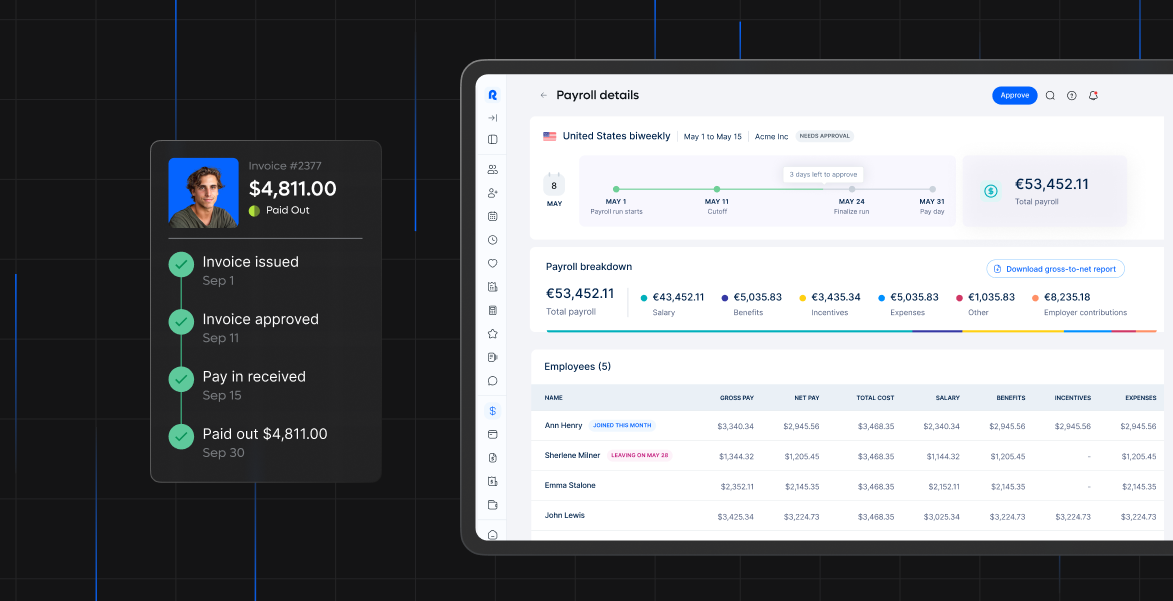
Remote supports hiring in Germany and many other countries, offering services that include global payroll, compliance support, benefits administration, and contractor management.
The platform helps companies hiring in Germany manage localized employment contracts, payroll administration, statutory benefits, and compliance with German labor laws.
Remote also places a strong emphasis on intellectual property protection and compliance workflows. Its IP Guard framework is designed to facilitate the transfer of intellectual property and invention rights directly from employees to the client company, rather than through intermediaries or third parties.
Remote’s onboarding process is also highly standardized, helping companies maintain more predictable onboarding timelines during international expansion. The company publishes a global average onboarding timeline of approximately three days once employees complete self-enrollment.
However, Remote’s pricing tends to be on the higher end compared to many other EOR providers, which may make it less attractive for startups or smaller businesses focused heavily on cost efficiency.
For a more detailed comparison, check out RemoFirst vs. Remote. You can also browse Remote’s G2 reviews for additional information.
Key Features
- Owned entities in multiple countries, including Germany
- Global payroll and compliance support
- Localized employment contracts
- Benefits administration
- Contractor management
- IP Guard framework for intellectual property protection
- Centralized document and audit management
- Standardized onboarding workflows
Pros
- Predictable onboarding and employment processes across multiple countries
- Strong infrastructure for managing compliance-heavy international hiring
- Useful document organization for audits and ongoing workforce administration
- Good fit for companies prioritizing IP protection and legal safeguards
- Broad functionality for managing employees and contractors in one platform
Cons
- Higher pricing than many competitors, with employee pricing starting around USD 699 per employee/month
- Less personalized support at lower pricing tiers
- May feel more enterprise-oriented than some startup-focused alternatives
4. Oyster
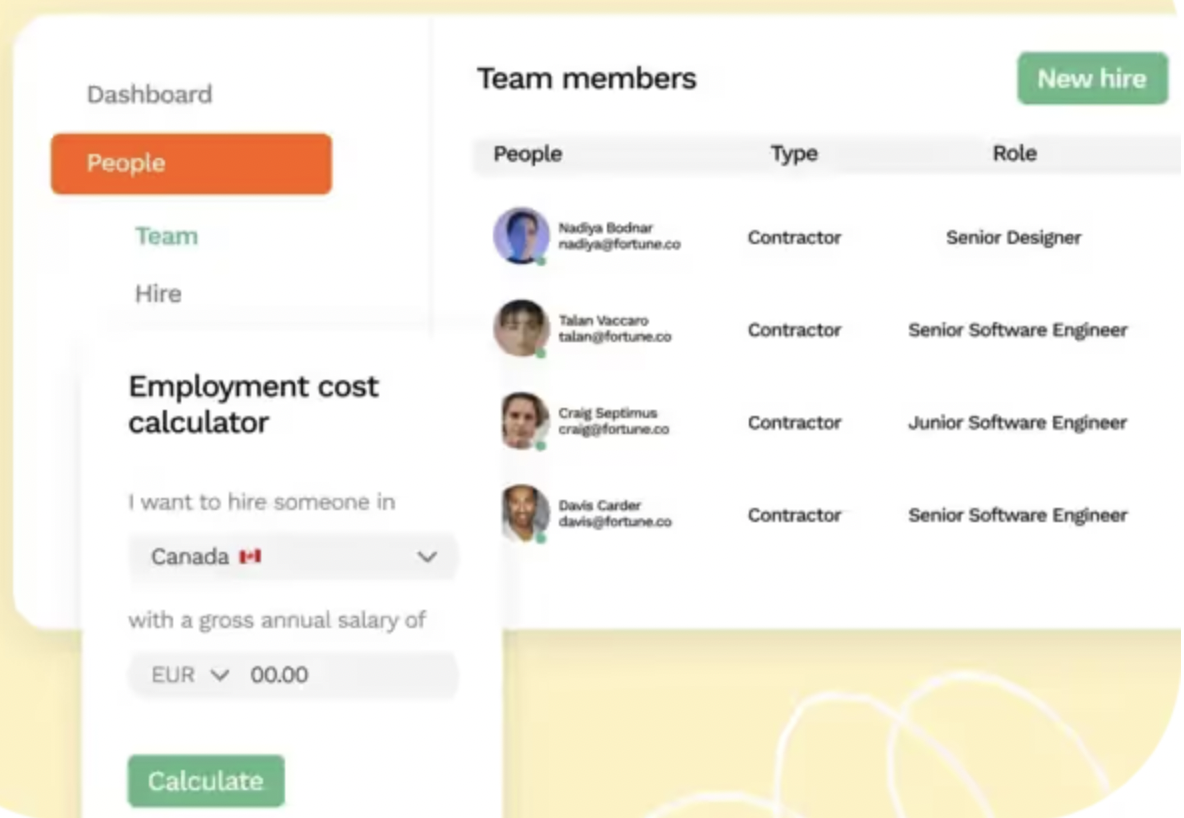
Oyster focuses heavily on helping companies navigate international hiring through structured compliance workflows and localized guidance. Rather than expecting internal teams to interpret labor laws themselves, the platform helps standardize processes around contracts, payroll setup, benefits administration, and ongoing compliance requirements.
Its approach is particularly useful for companies hiring across multiple countries simultaneously, where employment expectations, notice periods, and required documentation can vary significantly between markets.
Oyster emphasizes helping companies understand local employment norms and reducing the likelihood of compliance mistakes during onboarding, payroll changes, and employee terminations.
With coverage across 180+ countries, Oyster centralizes payroll, taxes, benefits, and contractor management into a single platform. The company also places a strong emphasis on translating local labor requirements into more accessible workflows for HR and operations teams that may not have deep international employment expertise in-house.
The platform integrates with a variety of HR and finance systems, helping teams sync employee records, payroll changes, and onboarding data without relying as heavily on manual administrative work.
Oyster also tends to avoid overly broad onboarding timeline promises, instead acknowledging that onboarding speed can vary depending on local country requirements and employment regulations.
For more information on how RemoFirst compares to Oyster, take a look at the RemoFirst vs. Oyster page, and browse Oyster’s G2 profile to see user feedback.
Key Features
- Global payroll and compliance support
- Localized employment contracts
- Benefits administration
- Contractor management
- Ongoing regulatory monitoring and compliance updates
- Native HR and finance integrations
- Centralized workforce management platform
- Structured onboarding and termination workflows
Pros
- Strong guidance around localized compliance requirements
- Useful for companies hiring across multiple international markets simultaneously
- Clear workflows for onboarding, payroll, and employee management
- Helps simplify complex labor law requirements for internal teams
- Integrations help reduce manual administrative work across HR and finance systems
Cons
- Pricing can be higher than that of some competitors
- Some companies may prefer more hands-on support models
- Onboarding timelines can vary significantly depending on country-specific requirements
5. Papaya Global
Payaya Global focuses heavily on payroll operations, compliance management, and workforce payments at scale, making it a strong fit for companies seeking more centralized financial oversight for international hiring.
The platform is designed to consolidate onboarding, payroll inputs, payment tracking, compliance workflows, and workforce data into a single system. This can help reduce the operational fragmentation that often happens when companies manage multiple local payroll vendors across different countries.
Papaya Global also emphasizes standardized payroll documentation, consolidated invoice management, and multi-currency payment visibility, which can be especially useful for finance teams managing larger international workforces. The platform supports hiring and payroll operations across 180+ countries and combines automated workflows with local compliance support.
Compared to some lighter-weight EOR platforms, Papaya Global tends to feel more operationally and finance-focused. Some workflows may require more internal coordination, particularly for companies looking for a simpler self-service hiring experience.
For a more detailed comparison, check out RemoFirst vs. Papaya Global or browse Papaya Global’s G2 reviews.
Key Features
- Global payroll automation
- Compliance management workflows
- Workforce analytics and reporting
- Consolidated invoice and payment tracking
- Multi-currency payment infrastructure
- Automated statutory filings and payroll tax reporting
- Centralized onboarding and payroll management
- Local compliance support across 180+ countries
Pros
- Strong payroll and finance-focused infrastructure
- Useful reporting and workforce visibility tools for larger organizations
- Helps centralize international payroll operations across multiple countries
- Multi-currency payment tracking improves visibility for finance teams
- Scales well for companies managing larger distributed workforces
Cons
- Pricing is quote-based and can become expensive depending on workforce size and support needs
- Platform may feel overly complex for smaller teams or one-off international hires
- Some workflows may require more internal operational ownership than simpler EOR platforms
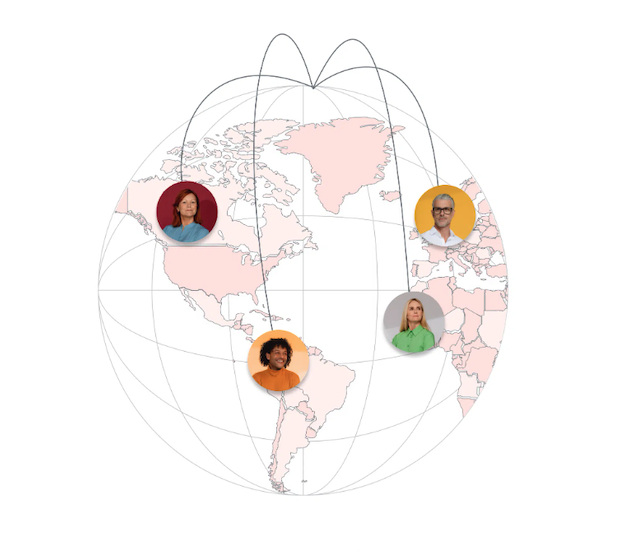
Hire Local Talent in Germany With a Comprehensive EOR Platform
Expanding into Germany gives companies access to one of Europe’s largest economies and a highly skilled workforce across cities like Berlin, Munich, Hamburg, and Frankfurt. However, German employment laws, payroll requirements, statutory benefits, and worker protections can create significant complexity for international employers.
Working with an EOR simplifies hiring in Germany by allowing companies to hire employees without establishing a local business presence, while helping ensure compliance with German labor laws, payroll regulations, taxes, and mandatory benefits requirements.
With so many EOR options available, the right choice ultimately depends on your company’s priorities, whether that’s lower costs, direct entity ownership, finance-focused reporting, onboarding speed, or hands-on support.
For many startups and growing businesses, RemoFirst offers one of the strongest overall value propositions. Coverage across 185+ countries means companies can continue scaling internationally without needing to switch providers as hiring expands.
Transparent pricing, dedicated support, fast onboarding, and comprehensive compliance coverage help simplify hiring in Germany while keeping international employment costs more predictable.
Ready to get started? Book a demo to learn how RemoFirst can help you hire compliantly and confidently.