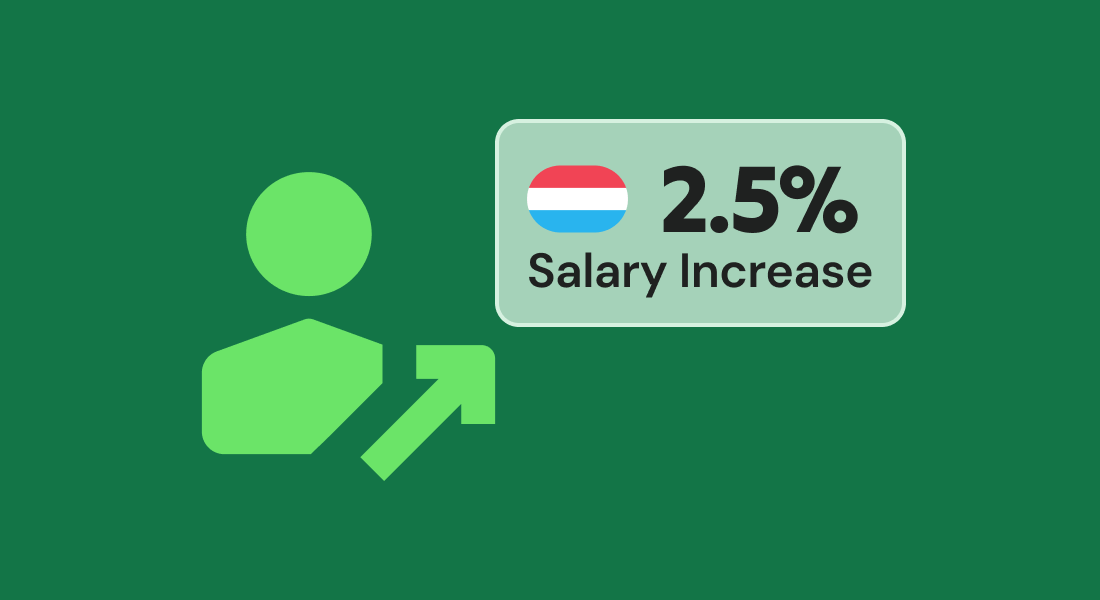
The Luxembourg government has triggered a mandatory statutory salary indexation. Effective June 1, 2026, every employer in Luxembourg is required to increase all gross salaries by 2.5%.
This isn’t optional, and it’s not subject to individual negotiation. Once the government activates the mechanism, the adjustment applies automatically across every employment contract in the country.
The index is tied to Luxembourg's consumer price index, administered by STATEC, the national statistics office. When the CPI crosses a defined threshold, a wage adjustment is triggered by law.
This is a long-standing feature of Luxembourg's labor framework, designed to protect workers' purchasing power as the cost of living rises.
No contract amendments are required. The increase takes effect by statute, which means your existing employment agreements remain valid and the new salary baseline applies from June 1 without any additional paperwork required.
Practical Implications for Your Global Hiring Team
For companies employing workers in Luxembourg, the immediate impact is on payroll and invoicing. June 2026 invoices must reflect the adjusted salary amounts, so teams that haven't already updated their cost projections should do so now.
The adjustment applies to all employees covered by Luxembourg's labor code, regardless of role, seniority, or whether they are on fixed or variable contracts.
- Part-time employees receive the same proportional uplift.
- Independent contractors are generally outside the scope of the statutory index, though proper worker classification remains critical and misclassification risks are heightened when companies try to structure arrangements around local labor requirements.
From a budgeting perspective, a 2.5% salary increase may seem modest on a per-employee basis, but it compounds across a workforce because future indexation increases are applied to the new, higher salary amount
Although contract amendments are generally not required, it is still worth reviewing any agreements that reference fixed salary amounts to ensure they reflect the updated compensation levels.
What This Means for RemoFirst Customers
Luxembourg's wage indexation reflects something worth acknowledging: a government actively protecting workers from rising costs of living. For employers, a mandatory 2.5% increase is a reminder that employee purchasing power is a priority in Luxembourg's labor market and should be factored into workforce planning.
For RemoFirst customers with employees in Luxembourg, no action is required — the June 1 adjustment has already been applied to payroll. No action is needed on your end. Our team has accounted for the updated salary baseline, and June invoices will include the adjusted amounts automatically.
This is part of how RemoFirst approaches compliance more broadly. We monitor labor law changes across every country we operate in, so employers are informed before changes take effect, not after.
Luxembourg's indexation system has predictable triggers, but not every policy change does. Our job is to track the ones that matter, translate them into clear implications for your team, and make sure your employment practices stay aligned with local law before any deadline arrives.
The cost of missing a mandatory wage adjustment in Luxembourg is not just a payroll correction. It is a breach of local labor law, which can lead to employee disputes and regulatory penalties.
We exist so that risk never lands on you.
Book a demo today to learn how RemoFirst can help you hire and support employees in Luxembourg and 185+ countries worldwide.