Full Episode Transcript: Rui Bashir on Global HR Management
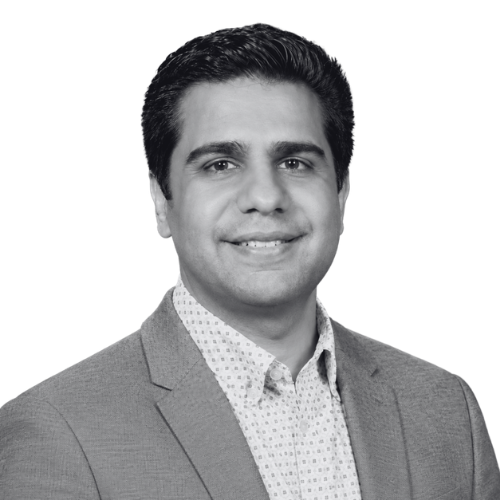
Introducing Rui Bashir
Leah Cottham: Hi everyone, and welcome back to this next episode of the Freedom of Work Podcast. On this show we talk about distributed work, global hiring, scaling, and everything in between. Today we're joined by a special guest who can speak to all of those things from experience. Rui, if you'd like to take the stage and give a bit of an introduction about who you are and where you've come from.
Rui Bashir: Thank you so much, Leah, for the opportunity. It's great to be here and connect with your audience. My name is Rui Bashir. I want to start by sharing that my career began on the ground, building HR functions in markets where they didn't even exist yet. I started in sub-Saharan Africa, and that experience still sticks with me. I learned very quickly what actually works versus what just sounds good in a meeting.
Currently, I'm a global HR director for a Fortune 500 company. The scale is different, but the core puzzle is exactly the same: taking a global strategy and making sure it actually functions in reality.
I'm also trilingual. I speak English, Portuguese, and Spanish, and that's honestly the biggest advantage I have, because you hear the same message in all three and realize the words are just the vehicle. What actually matters is the culture of the room you're speaking to. Closing that gap between what leadership intends and what the local team actually feels is the most fascinating part of my job.
Leah: I love that. You've got some incredible experience behind you, and it's clearly shaped why you love doing what you do. Thank you for that introduction, Rui, it's given a great sense of who you are.
Building an HR Solution Center Across Latin America
Leah: Before your current role, you spent years scaling across different countries in Latin America at Bic. What did building an HR solutions center at that scale actually teach you?
Rui: It was a fascinating time. I had a dual role: I was managing a team of HR business partners and building that function entirely from scratch across the region. We had a direct presence in about eleven countries, but we were operating in a totally decentralized model. Every country was essentially on its own, with no center of excellence.
So I built a regional center of excellence for Latin America, which I called the Solution Center. I structured it across four verticals. The first was talent: acquisition, management, and development. The second was total rewards, which covered compensation, benefits, and regional mobility. The third was internal communications. There's often a debate about whether internal comms sits under HR or stands alone, but I feel strongly it belongs under HR, because everything we do involves communicating and engaging with employees. The fourth was PMO, project management for any HR projects running across Latin America.
The intent was to bring alignment and consistency to the employee experience. But the real lesson was defining the boundary between what you must standardize and what you must protect. Eleven countries, including Brazil, which is Portuguese-speaking, and a mix of Hispanic countries that are culturally distinct even within the same region.
What to Standardize and What to Leave Local
Rui: Workflows, project management, total reward systems: those you standardize. If a process doesn't look the same everywhere, you're carrying complexity that compromises the ROI you're aiming for. But the human conversation is different. You can't put that in a global manual. If you try to script how a manager handles a talent conversation, or shows empathy in a crisis, it might look efficient on paper, but you destroy the trust that makes the operation run.
Where I got it wrong at first was treating all four verticals the same way. Efficiency is easy to measure, which makes it tempting to optimize for. I thought if we could standardize the reward systems, we could standardize the talent conversations too. But when you only measure what you can see, you don't realize what you've broken until someone tells you: the regional system functions perfectly, but nobody trusts it enough to use it.
Leah: That's such an interesting way to look at it, breaking it into four segments and figuring out how to align and drive ROI. Once the standards are in place, you can start adapting per culture and per country. A benefit that matters in one region might not matter at all in another, and that's when you start losing talent, or seeing people go through the motions without really engaging.
Managing Across Time Zones and Cultures
Leah: What would you say was the trickiest part of supporting managers and employees across time zones, cultures, labor laws, and languages all at once?
Rui: Honestly, labor law is the straightforward part. It's written down. You partner with local counsel who knows the code better than you do, and you comply. That's not something you negotiate.
What requires real executive navigation is everything that isn't written down. Who is culturally permitted to disagree with whom? Does raising a red flag signal that you're engaged, or that you're not loyal to local leadership? Does silence in a room mean consensus, or does it mean deep disagreement that headquarters finds out about six weeks later, when the sales didn't come through? None of that is in the employment code.
Fluency in English, Portuguese, and Spanish isn't just how I communicate, it's how I diagnose that risk. A global strategy can be perfectly translated, but flawless translation is useless if you don't understand the authority structures and psychological safety of the market you're entering. If you don't know how to read that shift, your global rollout is dead on arrival.
Leah: That's a beautiful way to put it. Cultural sensitivity needs to be there from the start of the journey when you're hiring somewhere new. A lot of the rules aren't written down, and things change as you go. I think that's the whole essence of HR: being constantly curious, but also careful. It's an emotional journey for people starting a new role, especially in a global company where things work differently than they might in their home country.
A Normal Week as a Global HR Director
Leah: What does a normal working week look like for you right now?
Rui: Curiosity is part of my week, definitely. I believe we're constantly learning in life, so that word feels very powerful to me.
The shape of my week is driven by global time zones. Early calls to accommodate Asia Pacific, late morning calls with colleagues in Europe, and afternoons mostly focused on the Americas. Time zones genuinely shape how my week looks; it's just the physics of the job. But I have to remember the human side of that too. If I schedule a high-stakes conversation at 7 p.m. for someone on the other side of the world, they're not going to be at their best, and that's on me. I try to be mindful about that.
A huge part of my week is anticipating friction. When we make a strategic decision globally, I need to know how it's going to land in an office 5,000 miles away before we roll it out, because the exact same message can read as clear direction in one country and as a warning in another. Nobody gives you a clean cheat sheet for that; you have to know your audience. The rest is untangling decision traffic: identifying who owns a problem, making sure they know they own it, and unblocking things when they stall.
Leah: It's day by day and week by week at the moment, with new tools constantly coming out to help. HR and HR tech move fast, and time zones really do sit at the forefront of having a global team. I think tools like AI notetakers have made a real difference too. If a call happens at 7 or 10 p.m. and you come away with a summarized list of tasks, you can log back on without feeling like you missed the conversation. That matters a lot in cross-time-zone companies.
Where Compliance and Culture Collide in M&A
Leah: We've touched on compliance, culture, and the gaps between them. Where do you see those things colliding, whether that's culture, engagement, or performance?
Rui: Compliance is a baseline, not a strategy. You can pass every HR audit and still have a culture that's quietly falling apart. Too many organizations mistake a clean audit for a healthy team.
You see this collision a lot in M&A. There's enormous legal and financial rigor that goes into the front end of a deal, but there's a common misconception that HR steps in the day after the announcement to handle the transition. That's far too late. Strategic HR is about architecting real integration long before the announcement is ever made. My advice to the HR community: be invited into those conversations as early as possible, because integration starts before the deal is signed.
At that early stage, we start mapping cultural risk and anticipating human friction while the deal is still being negotiated. That gives you a head start once you actually have to bring the integration plan to life. The moment the announcement goes live, every employee in the acquired business starts running their own mental math: What's going to happen to my role? Who's my new leader? Does my track record even matter here? Which legal entity am I going to be employed by? Sometimes we don't have our own legal entity in that market, and the deal doesn't include the acquired legal entity either, which is where we reach out to experts to help us operate there.
If you haven't built the framework to manage that anxiety beforehand, it doesn't matter how perfect the financial synergies look on paper. Execution gets challenging. The most common pattern I see is treating cross-border acquisition strictly as a legal integration rather than a cultural collision, because there's the organizational culture of two businesses colliding, and often a geographic culture too.
You can legally merge two entities, but the org chart doesn't automatically translate across borders. The acquiring company often assumes that because reporting lines are finalized on paper, authority naturally transfers. It doesn't. If you acquire a team in Latin America and apply a US-centric management style on day one, your legal compliance becomes irrelevant. You'll start leaking talent because you didn't account for how differently that culture reads authority and feedback.
Leah: Those characteristics play a huge part in keeping employees engaged. I've seen it in projects: someone says "I need this quickly," but quickly doesn't mean the same thing to everyone; it could mean now, or it could mean two weeks away. Defining words differently across cultures can make projects fall apart, which is why it helps to align on wording and use project management tools with clear dates rather than words like "quickly" or "immediately."
Rui: I have an example of that too. I lived in Johannesburg, South Africa, for many years, and every visitor would ask me the difference between "now," "now now," and "just now." Locally, even South Africans can't always differentiate those clearly, but they do mean different things.
Then I moved from South Africa to Mexico, and there's a word in Spanish, "ahorita." Someone asks you to do something, and the answer is "ahorita," meaning I'll do it now. But that "now" could be ten minutes, an hour, two days, a week, or never. You never quite know how to read it. Some words mean genuinely different things depending on where you are.
Leah: It's not that people mean to be vague, they're not trying to cause friction, they want to help the project move smoothly. But small things like that can have a real impact.
Building Processes That Scale Without Losing the Human Touch
Leah: What have you learned about building HR processes that scale across borders without losing the human touch?
Rui: You build the architecture once, but you let local leaders deliver it in their own register. It goes back to what we were just saying about words meaning different things. Local leadership needs to be part of co-creating that architecture. Headquarters can design a flawless process, but adoption is a deeply human choice. If you try to script exactly how a new process sounds when it reaches an employee, you create something that feels consistent but not sincere.
People don't adopt processes, they follow leaders they trust. That's why local leadership involvement matters so much; it adds the human touch.
The second rule is to build for the middle. Senior leaders are highly adaptable, and junior talent generally follows direction, but middle managers are the ones who actually have to generate the desire for change on the ground. Mapping your stakeholders before a rollout has a high ROI.
The last piece, to make change stick, is knowing who actually holds the operation together. Every business has people who are load-bearing without appearing anywhere near the top of the org chart. They have strong social influence and institutional memory. If you don't secure their buy-in during a transition, the change won't survive, because that institutional memory lives with them. So: map your stakeholders clearly, bring them into the co-creation, and let them deploy it. That's what gives you the human touch.
Leah: Adoption is key, because people need to believe in the company and the success as much as you believed in them when you hired them. That can be harder when you're remote, which is why the human touch matters so much. I also really like your point about focusing on middle management specifically, since they're absorbing pressure from both directions while leadership and junior staff are more straightforward to bring along.
The Leadership Advice That Doesn't Travel
Leah: Is there a piece of HR advice you used to believe that just doesn't hold up once you go global?
Rui: Yes. The worst offender is "just be direct." It's terrible global advice, and I used to preach it myself, full confession. South Africa tends to be a much more direct culture than Latin America, and I carried that advice with me when I moved. It works beautifully in some markets and completely shuts a room down in others. Directness is a local custom. It requires a lot of confidence, and the people who prefer it rarely realize how aggressive it feels to everyone else.
"Speak up if you have concerns" is another dangerous one. It sounds highly inclusive in Western contexts, but in some markets it feels like a trap: people stay quiet to see what happens to whoever takes the bait first. Same sentence, entirely opposite meaning depending on where you say it.
And then there's "move fast." Great aspiration, terrible instruction. Speed requires people to know exactly what they're authorized to decide. If the boundaries are fuzzy, telling a global team to move fast just gets you confident mistakes, faster.
Leah: I love that. Directness works when the whole team shares that style, but as you go global, it can tear things apart just as easily. And "move fast" is the same: everyone wants to move quickly, but there will always be barriers standing in the way, and you can only get so far without clarity.
One Rollout, Three Different Markets, Three Different Outcomes
Leah: You mentioned earlier that the same rollout can land in completely different ways depending on the market. Is there a story behind that?
Rui: Definitely. I once rolled out a unified sales incentive plan across three key markets in Latin America: Mexico, Brazil, and Argentina. Same compensation structure, same targets, same launch playbook. A sales incentive never quietly dies, because there's money on the table, and people follow the money, but they follow it locally.
One team hit the new targets exactly as intended. Another team focused entirely on a different part of the compensation plan, because it made more sense for their specific market, missing the strategic goal we wanted. The third team, in Argentina, ignored the new incentive entirely, because given the macroeconomic reality, selling the legacy product was still much safer for their earnings. Same playbook, three completely different outcomes.
The mistake we made afterward was asking, "Why aren't they adopting the behaviors we want?" That question just leads to more training slides. The real question should have been: how does this actually impact your wallet on the ground? The greater lesson, and what I'd advise any HR leader to do before finalizing a global or regional plan, is to go directly to local managers and ask: if a top performer looks at this plan and decides it doesn't make sense for them, what local reality did we fail to see? That's the question that shows you the friction you're blind to, and honestly, local teams will tell you immediately if you ask.
Leah: It's about the wording of those questions. If you ask a sales team about an incentive, they'll usually say they want it easier, but it also needs to be genuinely achievable. Asking the right questions upfront, rather than just "do you like the plan," is what lets you roll out something that actually works for each market.
Careful vs. Checked Out: Reading Silence on Global Teams
Leah: Why do you think quiet employees in a new market so often get misread as resistant, when that might not be what's actually going on?
Rui: From a distance, an employee being careful looks exactly like one who's checked out. Both are quiet. But they're totally different. The careful person still does great work; ask them a direct question and they'll give you a brilliant answer. They've just lowered their visibility to protect themselves, usually because they see a risk leadership might have missed.
The checked-out person is different. Their work gets sloppy, they stop asking questions entirely, and they've essentially already quit, they just haven't told you yet.
If someone is just being careful, the fix is easy: explicitly define the boundaries, tell them disagreement is safe, create a psychologically safe environment, and treat it as an information problem rather than a character flaw.
Leah: That's a great distinction. If someone's checked out, they've effectively already left, and it's hard to get them back. Psychological safety is a nice way of framing it, and it needs to be actively built into remote and global work, because it's harder for people to find naturally at a distance.
What AI Is Doing to How People See Their Own Standing
Leah: Last question on this theme: what do you think AI is doing to how people see their own standing on a team, and how should leaders handle that shift?
Rui: Everyone's hyper-focused on the tools right now: which model, which vendor. That's actually the easier part. The harder part is standing. Someone spends ten years becoming the fastest coder or the best data analyst on their team; that's their identity in the room, and they earned it the hard way. Then a tool drops that does that work in 30 seconds. No one says out loud that the value just dropped, but everyone feels it.
When people resist these tools, they're rarely fighting the technology itself. They're worried about their own relevance, and they can't exactly raise their hand in a meeting and say, "What am I for now?" When leaders celebrate efficiency gains, they're often celebrating the exact thing the employee is quietly terrified of.
The answer is to give people a new mandate: show them what the tool frees them up to do, and hand them a problem that requires human wisdom and judgment. We need to look at AI through an equity and inclusion lens, not just a productivity one.
Leah: People have worked so hard to build specific skills, so a tool arriving that changes the equation can be genuinely disruptive. But using that saved time to create more value elsewhere, and to grow careers in new directions, is the right way to look at it.
Final Advice: Decide Who Decides, and the SHIFT Framework
Leah: As we wrap up, what's one piece of advice you'd give to an HR leader, or someone without the global title yet, who's looking to go global?
Rui: Decide who decides. Before you launch anything globally, write down the five big decisions, who owns them, and be honest about which ones are still open. It's okay not to have all the answers. "We don't know yet, we'll decide by Friday" is a fine answer; people can handle that. What they can't handle is silence, because they'll fill it in with the worst-case scenario.
A lot of global failures get blamed on culture clashes, but most of them are really authority problems in disguise. People didn't know if they were allowed to make the call, so they did nothing. Make the authority crystal clear, decide who decides, and let go of the rest. You don't need everyone communicating the exact same way, authenticity matters, you just need everyone to know what they're empowered to do.
Once that global authority is set, the real test happens in the micro: the one-on-one meetings. What a great manager looks like, or whether you raise an issue openly versus wait to be asked, changes completely from one place to the next. I put together a short guide for that called SHIFT: five moves for navigating global one-on-ones.
SHIFT stands for: Set the room, Human first, Invite the answer, Fit the culture, and Track the commitment, because at the end of the day, there needs to be accountability and a clear outcome. The five moves stay exactly the same wherever you are in the world; what changes is how you ask. I'd love to share it with anyone listening today.
Leah: That was the perfect way to close this out. Decide who decides, be honest, and the SHIFT framework. Rui, thank you so much for joining me on the podcast, I can't believe fifty minutes have gone by so fast. You've given an amazing view into life as a global HR director: cross-border, cross-timezone, cross-language, and practical advice people can actually hold onto. Thank you for joining Freedom of Work, and thank you to everyone listening and watching.
Rui: Thank you, nice to be here.